Skip to content

Roofing

Roof replacement in Muskego and southeast Wisconsin

A new roof is a system, not a fresh layer of shingles: tear-off to the deck, ice barrier at the eaves, flashing at every wall and chimney, and an attic that actually breathes. Each layer goes on in the order that keeps water moving down and out.

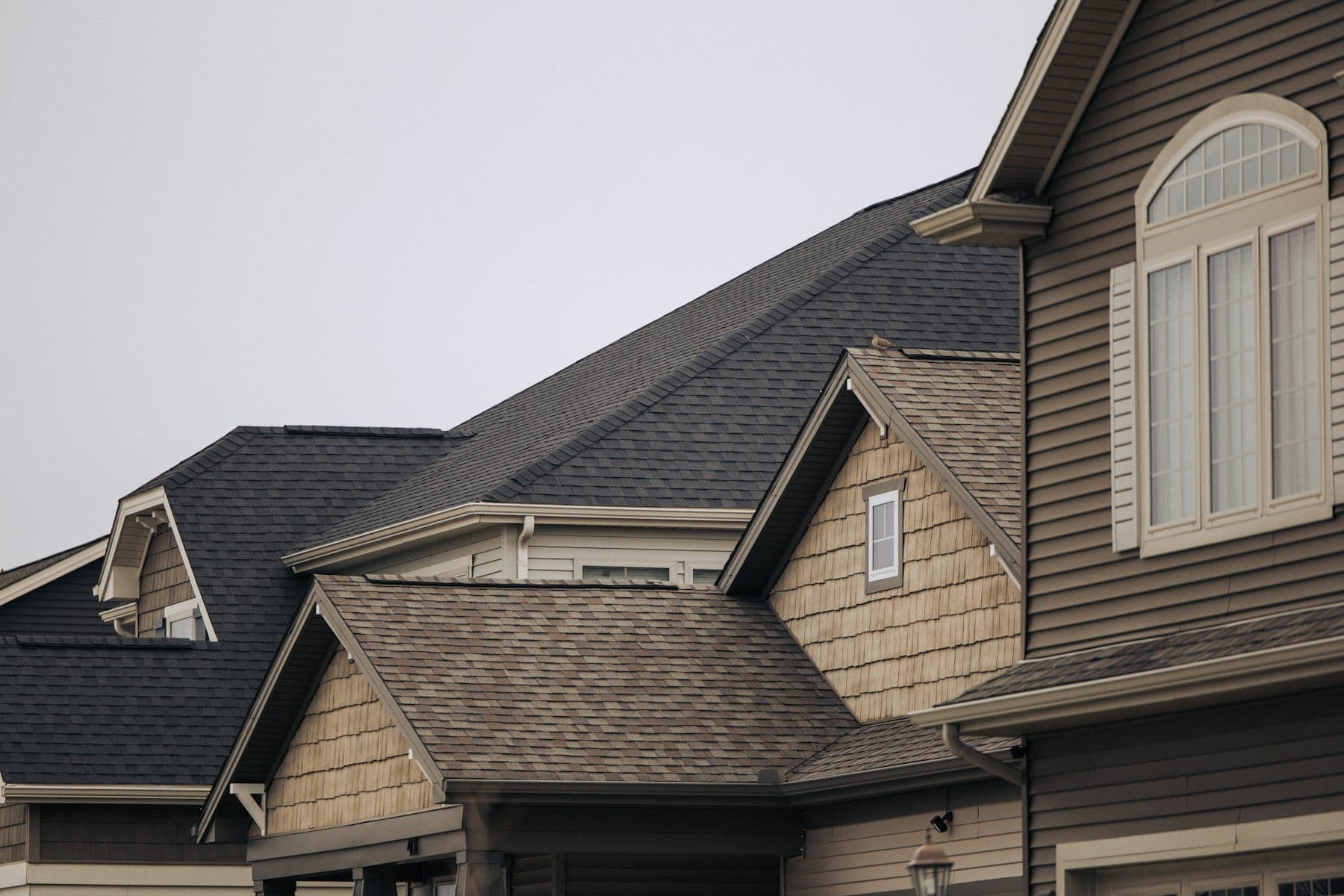
Intersecting gables and valleys on a two-storey home with dark asphalt shingles, lap siding and shake accents

C&L Property Improvements is a family-owned company based in Muskego that replaces asphalt shingle roofs across Waukesha, Milwaukee and Racine counties. This page is about full replacement. For a single leak or a few blown-off shingles, start with roof repair.

Most shingle roofs do not fail in the open field of the roof. They fail at the edges and joints: the eave where ice builds up, the sidewall where old step flashing was reused, the chimney caulked where it needed counterflashing, the attic that holds damp air all winter. A replacement is the one time in a generation all of those details are open, so this page spends most of its time on them.

C&L's estimates are free, done in person, and the scope is put in writing. It names the underlayment, the ice barrier coverage, the ventilation plan and each flashing detail, so it can be compared line by line with any other bid. For what drives the price, see the roof replacement cost guide.

What a full replacement includes

Tear-off to the deck

Every existing layer comes off. It is the only way to see the deck, replace rotted wood and put membrane directly on clean sheathing. Even where a second layer is legal, an overlay hides the deck and keeps the old flashing, which is often why the old roof leaked.

Deck inspection and replacement

Soft, delaminated or rotted sheathing is cut out and replaced, most often along the eaves where ice dams backed water up and around chimneys, skylights and old pipe boots. Nobody can count rotten boards before tear-off, so a good estimate says how replacement sheathing is priced.

Ice barrier at eaves, valleys and penetrations

A self-adhered membrane that seals around nails, laid where ice dams push water uphill. Wisconsin sets a minimum on low-slope roofs (below); good practice also runs it in valleys, around chimneys and skylights, and at the eaves of steeper roofs.

Underlayment

Felt or synthetic sheet over the rest of the deck, lapped so each course sheds onto the one below. The dwelling code calls for No. 15 asphalt felt or an equivalent; synthetics are common because they are lighter and tear less.

Drip edge and flashing, replaced rather than reused

Drip edge at eaves and rakes; step flashing woven in one piece per course at walls; counterflashing cut into chimney mortar joints, not a bead of caulk; a kickout where a roof edge dies into a sidewall. Old flashing is usually bent, rusted or cut to the old shingles, so reusing it saves little.

Balanced attic ventilation

Air in low at the soffits, out high at the ridge, with baffles holding insulation off the soffit vents. Two exhaust types on one attic — a ridge vent plus gable louvers or a power fan — can draw from each other instead of the soffits. University of Minnesota Extension does not recommend mechanical attic ventilation.

Shingles, starter, hips and ridge

Starter strips at eaves and rakes, shingles nailed to the manufacturer's pattern, and cap shingles at hips and ridges. In cold weather, shingles are hand-sealed where the manufacturer requires it, because wind under an unsealed shingle is how new roofs lose them.

Close-up of dimensional asphalt shingles laid in a staggered, overlapping pattern across a roof plane

Shingle types, compared honestly

What separates a good roof from a poor one is mostly the details above, not the brand on the bundle. The shingle still matters for look, weight, wind and hail.

3-tab shingles

A single flat layer cut into three tabs — the uniform look of many 1970s and 1980s roofs.

Good for
Garages, sheds, or matching an existing 3-tab roof.
Watch for
Shorter expected life. InterNACHI's chart lists about 20 years for 3-tab and about 30 for architectural, and calls those figures guidelines only.

Architectural (laminated) shingles

Two or more layers laminated together into a heavier shingle with a dimensional, shadowed look. The default for most houses.

Good for
Most homes. The thickness also helps hide minor unevenness in an older deck.
Watch for
“50-year” labels describe the manufacturer's coverage terms, not expected life. Read what that coverage requires; CertainTeed's instructions, for example, exclude damage from inadequate ventilation.

Impact-rated shingles

Shingles made and tested to resist hail, many with a more flexible, rubber-modified asphalt.

Good for
Owners who have been through hail claims, or who want the toughest asphalt option.
Watch for
Higher cost, and hail-resistant is not hail-proof. If insurance savings are the reason, ask your insurer in writing whether it credits an impact-rated roof and what documentation it needs.

How it’s built

The roof, layer by layer

The roof, layer by layerEvery layer laps over the one below so water runs over each joint, never into it. Most leaks trace to a place where that order was broken. Layers, in order: 1. Roof deck; 2. Ice barrier at the eaves; 3. Underlayment; 4. Drip edge and flashing; 5. Shingles; 6. Ridge vent.inside face of wallheated space123456
Every layer laps over the one below so water runs over each joint, never into it. Most leaks trace to a place where that order was broken.
  1. Roof deck

    Plywood, OSB or, on many older homes, boards — sound, dry and flat before anything goes on top.

  2. Ice barrier at the eaves

    A self-adhered ASTM D1970 membrane at the roof edge and in valleys; code sets its reach on low-slope roofs, good practice extends it on steeper ones.

  3. Underlayment

    Felt or synthetic over the rest of the deck, lapped shingle-fashion — the second line of defense.

  4. Drip edge and flashing

    Metal at eaves, rakes, walls, chimneys and valleys. At the eaves the drip edge usually goes under the membrane; at the rakes, over the underlayment.

  5. Shingles

    Starter course, then shingles nailed to the manufacturer's pattern, with step flashing woven in at every wall.

  6. Ridge vent

    Continuous exhaust at the peak under cap shingles. It only works with matching intake at the soffits.

Decisions you'll make

  1. 01

    Tear off, or lay over?

    Tear off. A second layer is sometimes legal and a third never is, but either way an overlay leaves the deck unseen, the old flashing in place and no ice barrier, and makes the next tear-off heavier.

  2. 02

    How far should the ice barrier go?

    The code minimum covers low-slope eaves only. On a roof with an ice-dam history, run it farther up; put it in every valley and around chimneys and skylights; consider fully membraning low porch and shed roofs that tie into a wall. A good estimate states coverage in feet.

  3. 03

    Fix the attic now?

    If you get ice dams, the roof is only part of the fix — heat escaping into the attic causes them. Re-roofing is the moment to add baffles and a ridge vent and open blocked soffits. The ice dam guide explains the order of repairs.

  4. 04

    Skylights and chimneys: re-flash or replace?

    An old skylight flashed into a new roof may leak long before the shingles wear out; replace it while the roof is open if it is near the end of its life. Counterflashing needs sound mortar joints, so failing chimney mortar comes first.

  5. 05

    Gutters at the same time?

    If the gutters are undersized or pulling away, replacing them right after the roof lets the drip edge and gutter be set together. See gutters.

How a replacement goes

  1. 1

    Free estimate and written scope

    The roof is looked at in person and measured; the written scope names each layer, the ventilation plan, the flashing details and how deck repair is priced.

  2. 2

    Permit and materials

    Some municipalities require a re-roofing permit (below). Who applies should be written into the contract.

  3. 3

    Protection and tear-off

    Landscaping, siding and windows are protected, and the roof is stripped only as far as can be dried in again before nightfall or weather.

  4. 4

    Deck repair and dry-in

    Damaged sheathing is replaced; drip edge, ice barrier and underlayment make the house watertight again.

  5. 5

    Flashing, shingles and ventilation

    Shingles with woven step flashing, counterflashing at chimneys, kickouts, opened intake, and the ridge vent and cap.

  6. 6

    Final walk-through

    A proper final check covers every flashing detail and vent, gutters cleared of roofing debris and the yard swept for nails, with any open items written down.

Signs a roof is done

Granules in the gutters and bare patches

Granules shield the asphalt from sunlight. Once they wash off in quantity, the shingle wears fast.

Curling, cupping and cracking

Dried-out shingles curl at the edges or cup in the middle; cracks across tabs let water reach the nails.

Shingles lifting in ordinary wind

When the adhesive strips no longer hold, every storm takes a few more, and spot repairs stop keeping up.

Leaks in more than one place

One leak is usually a flashing or pipe-boot problem. Several at once point to a roof out of life.

Soft spots, sagging or daylight in the attic

A spongy deck or a dip in the roof line means sheathing, and sometimes framing, has been wet a long time.

Southeast Wisconsin

Wisconsin-specific details

One- and two-family homes here fall under the Wisconsin Uniform Dwelling Code (SPS 320–325), not the International Residential Code. The UDC covers homes started on or after June 1, 1980, and alterations to them; for older homes — most of Milwaukee — your municipality's requirements apply. These are the rules contractors most often misquote.

Ice barrier: what the code actually requires

SPS 321.28(4) requires ice dam protection on shingle roofs over heated space or an attached garage at a slope of 4:12 or less, reaching at least 30 in. up from the roof edge and at least 12 in. up the slope past the inside face of the exterior wall. With a deep overhang, one width of membrane may not get there. Steeper roofs are outside that clause, though CertainTeed's instructions strongly recommend an ASTM D1970 membrane on all slopes wherever ice can build up.

The two-layer rule

SPS 321.28(6) bars a new covering over a roof that already has two or more layers — two is the maximum, a third means tear-off. It also bars re-covering a water-soaked or deteriorated roof, or one of wood shakes, slate, clay, cement or asbestos-cement tile.

Attic ventilation depends on where the vents are

SPS 322.39 requires at least half the net free vent area high on the roof. If half to three-quarters is high, the total must be at least 1/300 of the ceiling area; if three-quarters or more is high, at least 1/150. An attic that is nearly all exhaust needs twice the vent area. Insulation may not block the airflow.

Chimneys and roof-to-wall joints

SPS 321.28(7) requires chimneys to be flashed and counterflashed at least 6 in., with a cricket behind any chimney wider than 30 in. on its uphill side. SPS 321.24(3)(f) requires flashing where an eave meets a sidewall to turn water away from the wall — the job of a kickout.

Roofing in cold weather

Shingle adhesive is activated by the sun's heat. Owens Corning applies special procedures at or below 40°F air and surface temperature, including hand-sealing every shingle along the roof perimeter, because cold-applied shingles may not seal until it warms. Milwaukee's normal highs are about 44°F or lower from December through March.

Storm damage and Wis. Stat. § 100.65

A residential contractor may not promise to pay or rebate any part of your insurance deductible. If you sign a contract for exterior work to be paid through an insurance claim, you may cancel it until the end of the third business day after your insurer notifies you in writing that the claim is denied in whole or in part. A contractor also may not represent you or negotiate your claim, though it may discuss the damage and, with your consent, submit its estimate. More in the storm damage guide.

Permits, timing and budget

Permits vary by municipality

Muskego requires a re-roofing permit at $10 per $1,000 of value, $125 minimum. The cities of Milwaukee and Waukesha do not require one for a one- or two-family home when the roof structure is unchanged. Franklin, New Berlin and Racine charge flat residential fees. The contract should say who applies; Muskego's own brochure makes the homeowner ultimately responsible. See the permits guide.

Season

Late spring through fall is easiest for shingles to lie flat and seal. Winter work is possible with the manufacturer's cold-weather steps, but the roof will not fully seal until it warms, and snow and ice must be cleared from the deck first.

Living through it

Tear-off is loud and shakes the house; take down top-floor wall hangings and move cars out of the driveway. With board sheathing, dust and old granules fall through the gaps into the attic, so cover anything stored there.

What drives the price

Roof area, layers coming off, pitch and height, deck replacement, ice barrier coverage, ventilation changes, chimneys and skylights, and the shingle line. The cost guide takes each in turn.

Cost guideRoof replacement cost in southeast WisconsinSourced, dated figures and what actually drives the price.

Questions about roofing

How many layers of shingles are allowed in Wisconsin?

Two at most. The dwelling code (SPS 321.28(6)) does not allow a new covering over two or more existing layers, or over a water-soaked or deteriorated roof. Even when a second layer is legal, a tear-off is usually the better roof.

Is ice and water shield required in Wisconsin?

On shingle roofs over heated space with a slope of 4:12 or less, yes: 30 in. up from the edge and 12 in. past the inside of the exterior wall. Steeper roofs are not covered by that rule, but manufacturers recommend it wherever ice can build up, which on most houses here means every eave.

Do I need a permit to replace my roof?

It depends on the municipality. Muskego requires one ($10 per $1,000 of value, $125 minimum); the cities of Milwaukee and Waukesha do not for a one- or two-family home when the structure is unchanged. Other towns charge a flat fee. The contract should say who applies.

Can a roof be replaced in winter?

Yes, with care. Shingles are brittle in the cold and their adhesive needs warmth, so manufacturers such as Owens Corning require hand-sealing at the perimeter at or below 40°F. The roof will not fully seal until warmer weather.

How long does a new asphalt roof last?

InterNACHI's guideline chart gives about 20 years for 3-tab and about 30 for architectural shingles under normal conditions. Ventilation, flashing, sun exposure and ice damming move that number more than the brand does, and the years printed on a bundle are coverage terms, not a forecast.

Will a new roof stop my ice dams?

Not by itself. Ice dams form when heat escaping into the attic melts snow that refreezes at the cold eave. Ice barrier limits the damage; air sealing, insulation and ventilation prevent the dams. See the ice dam guide.

A roofer offered to cover my insurance deductible. Is that allowed?

No. Wis. Stat. § 100.65 bars residential contractors from promising to pay or rebate any part of a property insurance deductible, including through discounts, credits or gifts. The same law lets you cancel an insurance-contingent contract if the claim is denied in writing.

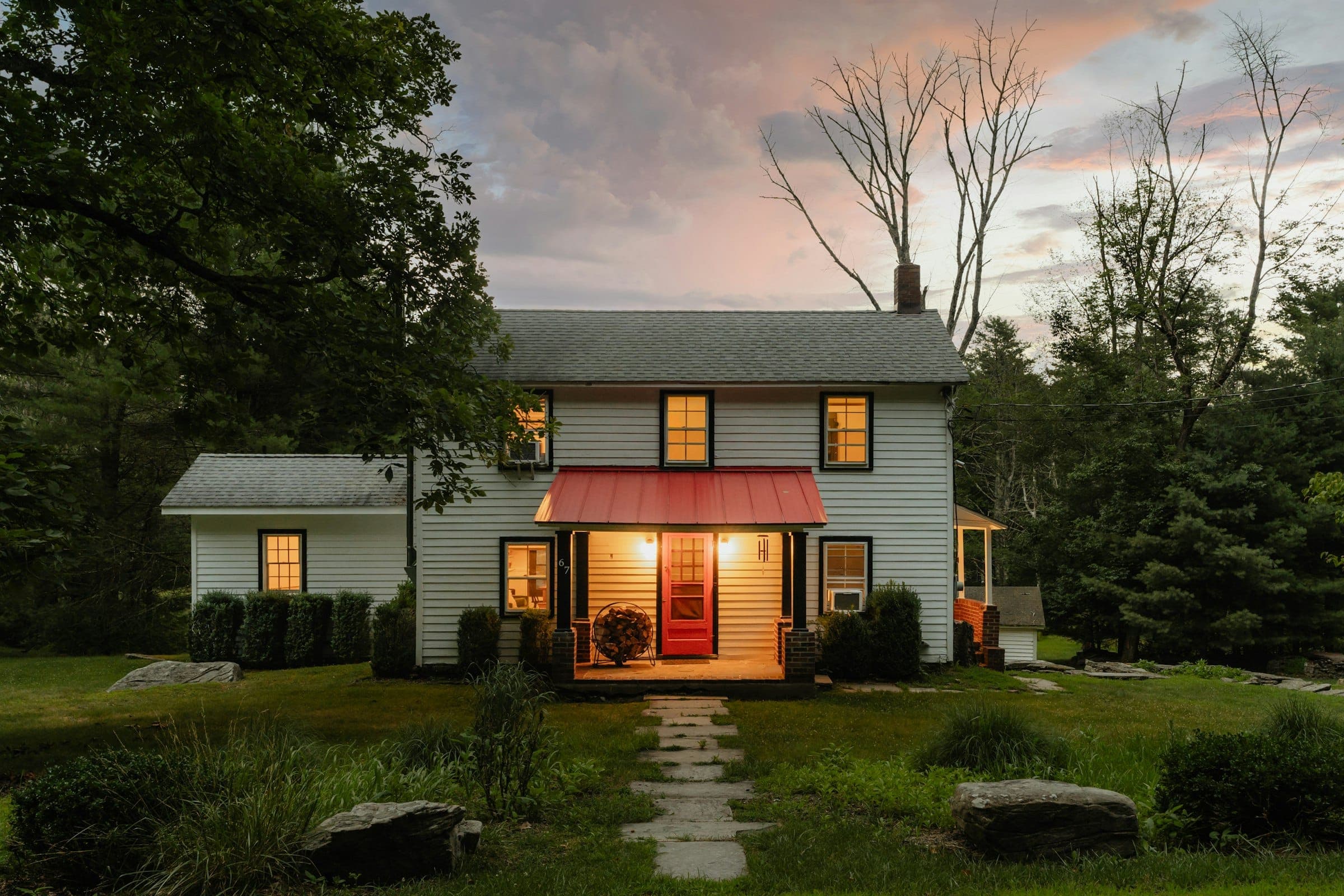
White clapboard farmhouse at dusk with lit windows and a glowing front porch under a red metal awning

Free estimates · Mon–Fri 8 a.m.–6 p.m. · Sat 9 a.m.–6 p.m.

Get a written roof scope

Estimates are free. C&L will look at the roof in person and put the scope in writing — tear-off, deck, ice barrier, flashing and ventilation — so you know exactly what you are comparing. Request an estimate.