Skip to content

Gutters

Gutter installation and cleaning in Muskego and southeast Wisconsin

A gutter has one job: catch the water coming off the roof edge and put it on the ground well away from the foundation. Size, pitch, hangers, downspouts and where the water finally lands decide whether it does that job.

Autumn oak leaves collected in a black gutter along the eave of an asphalt shingle roof

C&L Property Improvements is a family-owned company based in Muskego that installs and cleans gutters across Waukesha, Milwaukee and Racine counties, along with the downspouts, fascia and roof-edge details that go with them.

Gutters are a small share of what an exterior costs, but their failures show up everywhere else: a damp basement, rotted fascia and soffit, peeling paint below the eaves, ice sheets on the walk, and siding stained where water overshoots or runs behind the trough. Most of those come down to a few things: gutters too small for the roof, pitched the wrong way, hung without support, or downspouts that dump water against the house.

Gutters also get blamed for ice dams. They do not cause them; heat escaping into the attic does. Heavy ice can still tear a gutter off, which is why fastening matters here. The ice dam guide covers the cause.

Estimates are free and the scope is put in writing: gutter size and profile, material, hanger type and spacing, the number and size of downspouts, and where each one discharges.


What gutter work includes

Sizing to the roof

Gutter size depends on the roof area draining to each run, how steep it is, and whether a valley concentrates water at one spot. The common residential choices are 5 in. and 6 in. K-style. Steep roofs, long runs and valleys that dump into a gutter are where the larger size earns its place.

Downspouts: enough of them, big enough

A gutter can only empty as fast as its outlets allow. More downspouts, or larger ones, keep water from backing up and overflowing at corners and valleys. Larger outlets also clog less with leaves and seeds.

Pitch

Each run slopes slightly and evenly toward its outlet, enough to drain completely but not so much that it looks crooked on the fascia. Long runs are often pitched from the middle to downspouts at both ends. Standing water in a gutter means ice in January.

Hangers and fastening

Gutters are hung with hidden hangers screwed through the fascia into solid wood, spaced closer where snow and ice loads are heavy. Old-style spikes loosen as the wood shrinks and swells and are a common reason gutters sag or pull away.

Roof edge and drip edge

Water has to leave the roof into the gutter, not behind it. The drip edge or a gutter apron should lap into the gutter, and the gutter hung high enough that water cannot run down the fascia behind it.

Continuous gutters formed on site

A common option is aluminum gutter roll-formed on site from coil, so each run is one piece with joints only at corners and outlets. Fewer joints mean fewer places for sealant to fail.

Cleaning and flushing

Debris is removed from troughs and outlets, downspouts are flushed and checked for flow, and hangers, pitch and joints are looked at while the gutters are open. It is the cheapest check an exterior gets.

Gutter options, with honest trade-offs

Most houses here are well served by aluminum K-style gutters. The real choices are size, downspouts, guards and where the water goes.

5 in. K-style

The common size on many homes, with a profile that looks like crown molding.

Good for
Modest roof areas and moderate pitches without big valleys.
Watch for
Overflow at valleys and inside corners in heavy rain, especially with small downspouts.

6 in. K-style

Holds and moves noticeably more water, usually paired with larger downspouts.

Good for
Large or steep roofs, long runs, valleys that concentrate water, and houses under trees.
Watch for
A bigger face on the house, and a bit more cost per foot.

Half-round

A semicircular trough on exposed or hidden brackets, common on older and historic homes.

Good for
Matching the look of an older house.
Watch for
Different hangers and fittings, which can be harder to find, and less capacity than a K-style gutter of the same width.

Gutter guards

Screens, micro-mesh panels and reverse-curve covers that keep leaves out of the trough.

Good for
Houses under heavy tree cover where cleaning is frequent or hard to reach.
Watch for
None is maintenance-free. Fine debris and seeds collect on top of mesh, reverse-curve covers can overshoot in downpours, and some guards hold snow and ice at the edge. Guards still need checking and occasional cleaning.

Downspout extensions and buried drains

Extensions, splash blocks, or pipe buried to carry water farther from the house.

Good for
Getting water well clear of the foundation where the yard slopes the wrong way.
Watch for
Buried lines can clog and freeze, and where water ends up matters. Ask your municipality before connecting to anything underground or at the street.

How it’s built

Where the water goes

Where the water goesWater moves from roof to ground in four steps. A failure at any one of them puts water where it does damage. Layers, in order: 1. Roof edge and drip edge; 2. Gutter and pitch; 3. Downspout; 4. Discharge away from the foundation.foundation1234
Water moves from roof to ground in four steps. A failure at any one of them puts water where it does damage.
  1. Roof edge and drip edge

    Metal at the eave that laps into the gutter so water drops into the trough, not behind it onto the fascia.

  2. Gutter and pitch

    Sized to the roof and sloped evenly toward each outlet, hung on hangers screwed into solid wood.

  3. Downspout

    Enough outlets, large enough, to empty the gutter as fast as the roof fills it.

  4. Discharge away from the foundation

    An extension or drain that puts water on ground sloping away from the house, several feet from the wall.

Decisions you'll make

  1. 01

    5 in. or 6 in.?

    If the gutters overflow now at valleys or corners, if the roof is large or steep, or if trees drop a lot on the roof, the larger size and larger downspouts are usually worth it.

  2. 02

    Guards, or regular cleaning?

    Guards reduce cleaning but do not end it. On a house with few trees, twice-a-year cleaning is often cheaper and simpler. On a house under oaks and maples, a good guard can pay off.

  3. 03

    Where should each downspout go?

    Onto ground that slopes away from the house, clear of walks and drives where it would freeze, and not onto a neighbor's lot. This is often the most important decision on the job.

  4. 04

    Fascia and soffit now?

    Soft or rotted fascia will not hold new hangers. Replacing or wrapping it before new gutters go up is far easier than afterward. See siding for soffit and fascia.

  5. 05

    New roof coming?

    If the roof is due in the next few years, time the gutters to follow it so the drip edge and gutter can be set together. See roofing.

How gutter work goes

  1. 1

    Look at the roof and the ground

    The eaves are measured, valleys and roof areas noted, and the grade checked where each downspout lands.

  2. 2

    Written scope

    Size, material, hangers, downspouts and discharge points, plus any fascia repair.

  3. 3

    Remove and repair

    Old gutters come down, and rotted fascia is replaced or covered so hangers have solid wood.

  4. 4

    Hang and pitch

    Gutters are formed or cut to length, hung and pitched to their outlets, with corners and end caps sealed.

  5. 5

    Downspouts and discharge

    Downspouts are fastened to the wall and extensions set. Running water through each run confirms it drains.

Common gutter problems and their usual causes

Water pouring over the front

Clogged outlets, gutters too small for the roof, a valley overloading one spot, or pitch running the wrong way.

Water running behind the gutter

No drip edge or gutter apron, or a gutter hung too low below the roof edge. A missing drip edge is a small roof repair.

Gutters sagging or pulling off

Spikes loosened in the fascia, hangers too far apart, rotted fascia, or the weight of ice.

Wet basement or ponding by the foundation

Downspouts discharging right at the wall, missing extensions, or grade sloping toward the house.

Heavy icicles and ice-filled gutters

Usually heat loss from the attic melting snow that refreezes at the eave. The gutter is where the ice collects, not why it forms.

Leaking corners and end caps

Failed sealant at joints. Resealing works on sound gutters; repeated leaks on old sectional gutters point to replacement.

Southeast Wisconsin

Wisconsin-specific details

Gutters here handle summer downpours, a heavy leaf drop and months of snowmelt. These points come from university, state and building-science sources.

Downspouts and grade

University of Minnesota Extension recommends at least one downspout per 50 ft of eave, discharge at least 4 ft from the wall, and ground sloping away from the foundation at least 1 in. per foot for at least 6 ft.

Rain is getting heavier

The Wisconsin State Climatology Office reports that Milwaukee County averages about 11 days per decade with 2 in. or more of rain (2006–2025), that precipitation has been rising about 0.87 in. per decade, and that Milwaukee set a one-day record of 14.55 in. on Aug. 9–10, 2025. Gutters sized for gentle rain overflow in those storms.

Gutters do not cause ice dams

An ice dam needs snow on the roof, a roof surface above freezing higher up and below freezing at the eave. Heat escaping into the attic creates that difference. University of Minnesota Extension lists the fixes in order: air-seal, insulate, then ventilate. ENERGY STAR calls a history of ice dams a sign of serious air leaks. Gutters only collect the ice, but its weight can pull them off.

Roof-to-wall water belongs in the gutter

Wisconsin's dwelling code requires the flashing where a roof eave meets a sidewall to divert water away from the wall and onto the roof or into the gutter. LP's siding instructions call for a 1 in. gap between the gutter end and the siding, so the gutter end cap does not hold water against the wall.

Fall cleaning has a deadline

In Milwaukee County the average first freeze is October 17 and the average first hard freeze (28°F) is November 3. Cleaning after most leaves have dropped but before gutters and downspouts freeze keeps the first thaw from backing up at the eaves.

Timing, safety and budget

When to clean

Late fall, after the leaves are down, is the one cleaning that matters most. A spring check after the seeds and blossoms drop catches clogs before summer storms. Houses under heavy trees may need more.

When to install

Gutters can go up most of the year, but not onto ice-covered fascia, and sealants at corners and end caps need the temperature range on their labels.

Ladder safety

Ladder falls are the real hazard in gutter work. Two-story eaves, roofs over walkouts and anything icy are jobs for someone with the right ladders and fall protection.

What drives the price

Length of eave, number of stories, corners and miters, number and size of downspouts, guards, fascia repair and removal of the old system.

Order of exterior work

Gutters follow the roof and usually the siding and trim, so drip edge and fascia are finished before they go up. See the exterior project order guide.

Questions about gutters

Should I get 5 in. or 6 in. gutters?

It depends on the roof area draining to each run, its pitch and any valleys. Many modest roofs do fine with 5 in. Large or steep roofs, long runs, valleys and heavy tree cover are the cases for 6 in. gutters with larger downspouts.

How many downspouts do I need?

University of Minnesota Extension recommends at least one downspout per 50 ft of eave. More, or larger, downspouts help where a valley or a large roof area drains to one run.

Do gutters cause ice dams?

No. Ice dams come from heat escaping into the attic and melting snow that refreezes at the cold eave. Gutters fill with that ice, and its weight can pull them off, but removing gutters does not stop the dams. Air sealing and insulation do.

Are gutter guards worth it?

Sometimes. Under heavy tree cover they cut cleaning a lot. On a lightly treed lot, regular cleaning is often cheaper. No guard is maintenance-free, and some hold snow and ice at the edge in winter.

When should gutters be cleaned in Wisconsin?

Late fall after the leaves are down but before the first hard freeze (early November on average in Milwaukee County), plus a spring check. Houses under large trees may need more.

How far from the house should downspouts discharge?

At least 4 ft from the wall onto ground sloping away from the house, per University of Minnesota Extension. Farther is better where the grade is flat or slopes back toward the foundation.

Why is water coming down behind my gutters?

Usually the roof edge: no drip edge or gutter apron, or a gutter hung too low, so water runs down the fascia behind the trough. It rots fascia and soffit if left.

Should gutters be replaced with a new roof?

If they are due, yes, right after the roof, so the drip edge and gutter can be fitted together. Sound gutters can stay; the roofing scope should say whether they are taken down and rehung or left in place.

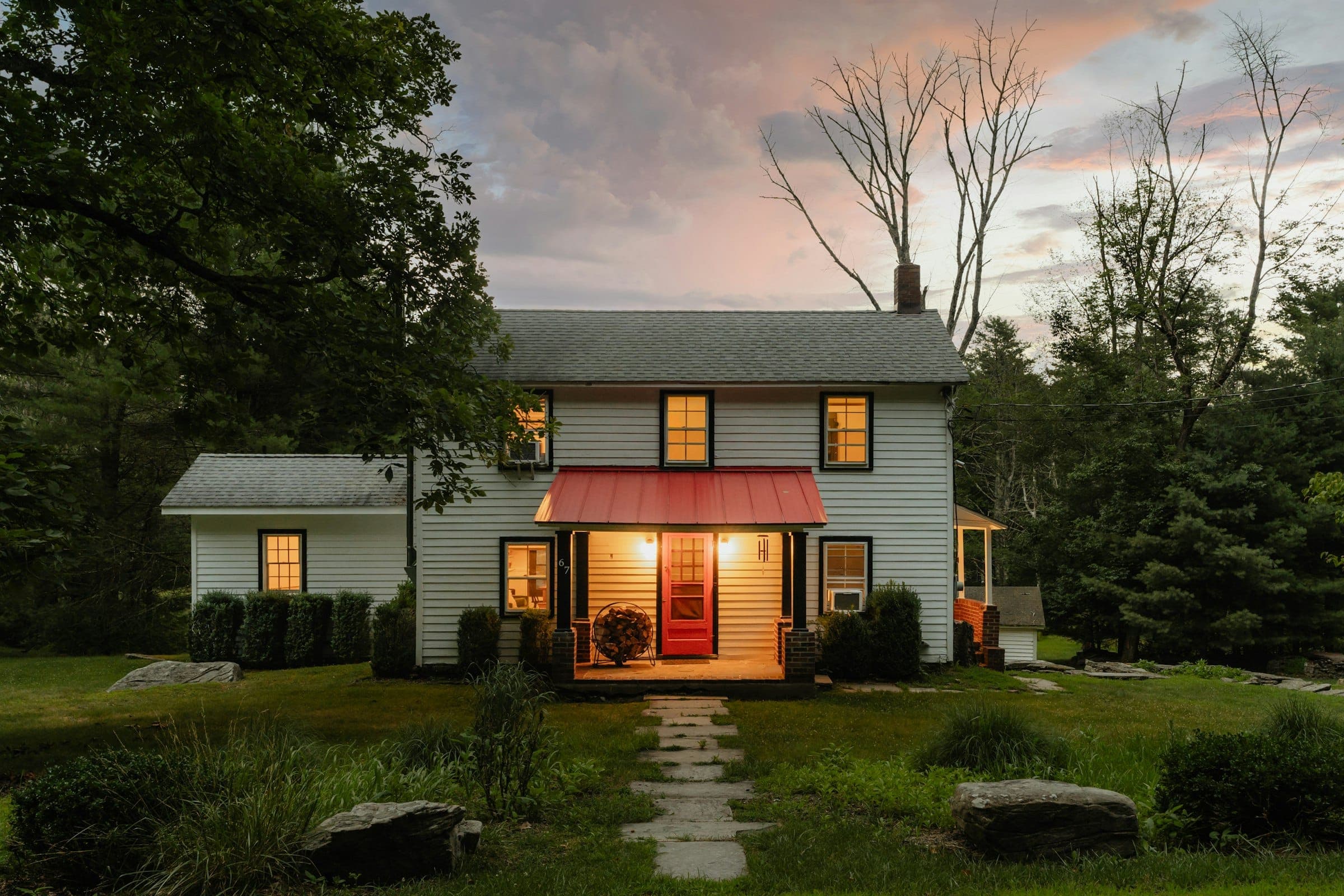
White clapboard farmhouse at dusk with lit windows and a glowing front porch under a red metal awning

Free estimates · Mon–Fri 8 a.m.–6 p.m. · Sat 9 a.m.–6 p.m.

Get water off the roof and away from the house

Estimates are free. C&L will look at the roof edge and the ground in person and put the gutter size, downspouts and discharge points in writing. Request an estimate.