
Cost guide
Roof replacement cost in southeast Wisconsin
The published numbers for replacing an asphalt shingle roof in the Milwaukee area, what each covers, and the parts of a roof price nobody can see from the driveway. Written by C&L Property Improvements, a family-owned roofing, siding and painting company based in Muskego.
- Pricing data
- 2025 data, reviewed September 2026
- Last reviewed
- September 17, 2026
The short answer
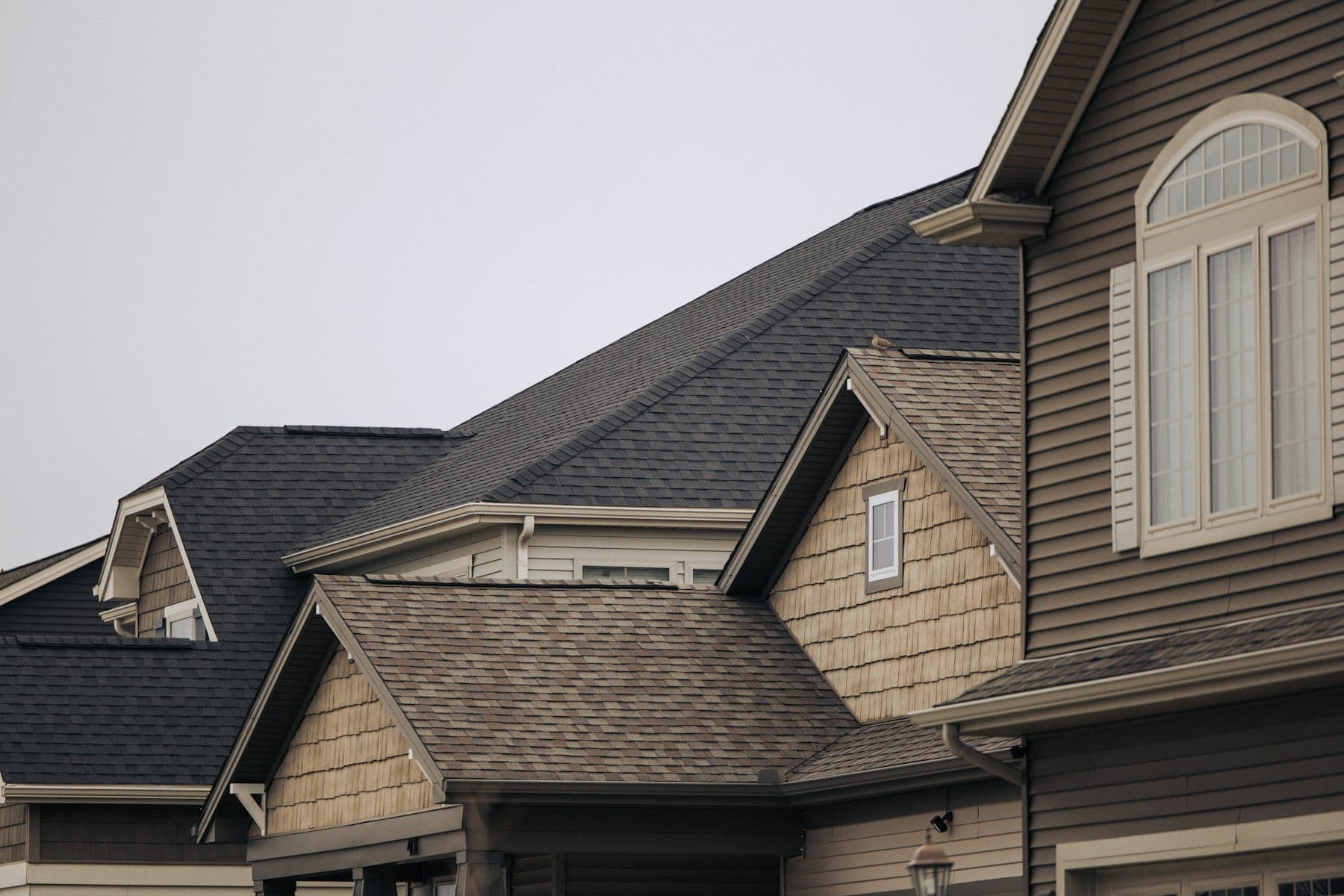
The Remodeling 2025 Cost vs. Value Report (www.costvsvalue.com) estimates an asphalt shingle roof replacement at $31,184 for the Milwaukee market. Its specification is a full tear-off to bare sheathing with disposal, 30 squares (3,000 sq ft of roof surface) of 235-lb fiberglass shingles, felt or synthetic underlayment, drip edge, flashing, a hip roof with two skylights and a vented ridge. The national figure for the same job is $31,871.
Two cautions. It is a modeled estimate for one fixed roof, not an average of Milwaukee invoices, and the report publishes no per-square price, so we have not calculated one. And its asphalt specification lists no ice-barrier membrane, which Wisconsin's Uniform Dwelling Code requires on low-slope roofs over heated space and which CertainTeed's installation instructions strongly recommend wherever ice can build up.
Nationally, the 2026 Houzz & Home Study reports a median of $13,000 for roofing projects in 2025, but that covers any roof project of any size, including partial roofs and repairs. The one hard local number is labor: roofers in the Milwaukee-Waukesha metro earned an hourly median of $28.91 in May 2025. That is what a roofer is paid, not what a roof costs.
We found no independent, measured per-square price for the Milwaukee area. Per-square prices published by local roofing firms conflict, in one case between a company's own pricing page and its blog. What actually sets a roof price is below, and a complete roofing estimate should address every item.
The published numbers
Each figure is shown exactly as its source states it, with the year the data describes, the area it measured, and what it covers. Figures from different sources are never averaged together.
$31,184
Roofing Replacement (Asphalt Shingles): tear-off to bare sheathing with disposal; 30 squares of 235-lb fiberglass asphalt shingles; 30-lb felt or synthetic underlayment; galvanized drip edge; aluminum flashing; rectangular hip roof with custom flashing at two skylights; vented ridge cap.
Remodeling 2025 Cost vs. Value Report (www.costvsvalue.com)Data: 2025Area: Milwaukee (Cost vs. Value market)Basis: Installed job cost, modeled estimate
Modeled for one fixed specification; not a survey of real Milwaukee jobs. No per-square figure is published. The specification lists no ice-barrier membrane.
$31,871
Roofing Replacement (Asphalt Shingles), same specification.
Remodeling 2025 Cost vs. Value Report (www.costvsvalue.com)Data: 2025Area: NationalBasis: Installed job cost, modeled estimate
Shown for comparison with the Milwaukee estimate.
median $13,000
Roofing projects of all types and sizes reported by renovating homeowners.
Houzz Research, 2026 U.S. Houzz & Home Study: Renovation TrendsData: 2025Area: National (Houzz users)Basis: Survey-reported spend
Scope undefined: may include partial roofs and repairs. Self-selected Houzz users; includes do-it-yourself work; no regional breakdown.
hourly mean $28.16; hourly median $28.91; annual mean $58,560; annual median $60,140; employment 980
Roofers (BLS occupation 47-2181).
U.S. Bureau of Labor Statistics, Occupational Employment and Wage Statistics (OEWS), May 2025Data: May 2025Area: Milwaukee-Waukesha MSABasis: Wage statistic (labor anchor only)
Worker pay, not contractor prices: a contractor's rate also carries payroll taxes, insurance, equipment, overhead and profit. Less precise than most trades (wage RSE 5.9%).
What actually drives the price
- 01
Roof size, in squares
Roofs are priced by the square, 100 sq ft of roof surface, plus waste for cuts at hips, valleys and edges. Roof area is not floor area: pitch, overhangs and dormers all add surface. A proper estimate states the measured squares and the waste allowance.
- 02
Layers to tear off, and disposal
Every existing layer is labor to strip and weight to haul. Wisconsin's Uniform Dwelling Code (SPS 321.28) bars a new roof over one that already has two or more layers, or over a water-soaked or deteriorated roof, so under that rule a two-layer roof is a full tear-off. Homes built before June 1980 follow your municipality's requirements. We found no published local figure for dumpster and disposal costs.
- 03
Deck condition
Rotted or delaminated sheathing cannot be seen until the shingles are off. The fair way to handle it is a unit price per sheet written into the contract before work starts, so replacement is priced in advance rather than negotiated on the day.
- 04
Pitch, height and walkability
A low-slope ranch roof you can walk on is faster and safer to work than a steep two-story roof that needs roof jacks, harnesses and staging. Steepness and stories set the labor, the safety equipment and how much a crew can lay in a day.
- 05
Ice barrier beyond the code minimum
The UDC requires ice dam protection on shingle roofs of 4:12 slope or less over heated space, from the eave to at least 30 in. up the roof and 12 in. past the inside face of the exterior wall. Steeper roofs are outside that rule, but CertainTeed's instructions strongly recommend an ASTM D1970 membrane on all slopes where ice can build up. Membrane in valleys and around chimneys and skylights adds material and labor; an estimate should say exactly where it goes. See ice dams in Wisconsin.
- 06
Ventilation corrections
Wisconsin's code ties attic vent area to where the vents sit, with at least half of it high on the roof. A reroof is the time to fix an attic that is short on soffit intake, mixes exhaust vent types or has bath fans dumping into it. That can mean ridge vent, new intake, baffles to keep insulation clear and new fan ducts.
- 07
Chimneys, walls and skylights
The UDC calls for chimneys to be flashed and counterflashed, with a cricket behind any chimney wider than 30 in. on its uphill side, and for flashing that turns water away where an eave meets a sidewall. Reusing tired flashing undermines a new roof. The Cost vs. Value specification includes custom flashing at two skylights; whether yours are re-flashed or replaced changes the price.
- 08
Complexity
Every valley, dormer, hip and wall intersection is slow cutting and flashing work. A cut-up 1½-story bungalow roof can take far more labor per square than a simple gable of the same area.
- 09
Access and site protection
Tight lots, landscaping, decks and a long carry to the dumpster add labor. In Muskego a dumpster needs a permit only if it sits on the street or sidewalk.
- 10
Season
Shingles can go on in cold weather, but Owens Corning's instructions require hand-sealing every shingle along the roof perimeter when air and surface temperatures are at or below 40°F, because the sealant strips will not activate until it warms up. That is extra labor on short winter days.
How projects differ
Simple gable, one layer, sound deck
A walkable ranch roof with a couple of vent pipes and no chimney. The estimate is mostly squares, tear-off, underlayment, ice barrier at the eaves and ridge ventilation. Few surprises.
Two layers and a tired deck
Both layers come off, several sheets of sheathing are soft, and the attic has no soffit intake. Tear-off, disposal, deck replacement at the agreed unit price and a ventilation correction all enter.
Cut-up roof on an older 1½-story house
Dormers, a wide brick chimney that needs a cricket, a low-slope porch roof over heated space that needs full ice barrier, and knee-wall attics that are hard to ventilate. Labor per square is high and the flashing details decide whether the roof leaks.
Re-roofing permit fees
Permit rules for re-roofing a one- or two-family home differ sharply between neighboring municipalities, from no permit at all to a fee that scales with the contract price. As each municipality publishes them; confirm before work starts. Our permit guide covers who is responsible for pulling the permit.
City of Muskego
Permit required. $10 per $1,000 of value (minimum of $125), so the fee scales with the contract price. Effective April 18, 2025. The city's brochure makes the homeowner ultimately responsible for permits and says fees may be tripled for unpermitted work.
City of Milwaukee
No permit required to repair, recover or replace any quantity of roof covering when the roof structure is not affected; replacing decking without framing changes is also exempt. Structural changes need a permit, and the city's form notes that locally designated historic and conservation districts need separate approval. Re-roofing form revised March 5, 2025.
City of Waukesha
No permit required for re-roofing with no structural changes. 2026 Development Fees, revised January 1, 2026.
City of Franklin
Residential re-roofing is listed at $60.00, but the minimum fee for any permit is $95.00, plus a $10.00 technology fee. Ordinance 2025-2714, effective on publication or December 2, 2025, whichever is later. The city requires the roofing contractor to hold valid State of Wisconsin certifications for the permit, and metal roofing needs Architectural Review Board approval.
City of Racine
$100.00 per building for residential roofing. 2026 fee schedule; no effective date printed. Starting without a permit doubles the fee.
City of New Berlin
$55.00 for residential reroofing, residing and trim. The schedule prints no effective date and the file dates from 2019, so this fee is unconfirmed; check it with the city.
Fee schedules
- 1.City of Muskego, permit fees (effective April 18, 2025) (opens in a new tab)
- 2.City of Muskego, permits and permit brochure (opens in a new tab)
- 3.City of Milwaukee, Re-Roofing Permit Application (revised 2025) (opens in a new tab)
- 4.Milwaukee Code of Ordinances, s. 200-24 (permit exceptions) (opens in a new tab)
- 5.City of Waukesha, 2026 Development Fees (opens in a new tab)
- 6.City of Franklin, Ordinance 2025-2714, Schedule of Building Permit Fees (opens in a new tab)
- 7.City of Franklin, Re-roofing permits (opens in a new tab)
- 8.City of Racine, 2026 Building Permit Fees (opens in a new tab)
- 9.City of New Berlin, Schedule of Permit Fees (undated) (opens in a new tab)
Controlling cost without cutting corners
Get the deck price in writing first
Ask for a per-sheet price for sheathing replacement in the contract. It takes the biggest unknown out of the price and lets you compare estimates fairly.
Replace a worn roof before it leaks
Water that gets past failing shingles rots the deck, and deck replacement is the part of a roof price that grows. A roof replaced on schedule usually needs less of it.
Fix the cause of ice dams once
Ice dams come from heat escaping into the attic. Air sealing, insulation and ventilation address the cause; membrane only limits the damage. Planning the attic work with the roof means the money goes at the problem rather than its symptoms.
Share the setup with work that is due
If gutters, fascia or siding near the roofline are due, doing them with the roof avoids paying for access twice. See gutters and our guide to the order of exterior projects.
Compare the specification, not only the total
Line up underlayment, ice barrier extent, ventilation plan, new versus reused flashing, deck unit price, disposal and permit. A lower total that leaves one of these out is not cheaper.
Weigh an overlay honestly
A second layer over one sound layer can be allowed and saves the tear-off now, but it hides the deck, adds weight and means two layers to remove next time.
Questions
How much does a new roof cost in the Milwaukee area?
The best-documented local figure is the 2025 Cost vs. Value estimate of $31,184 for a defined 30-square asphalt tear-off in the Milwaukee market. Your roof's size, layers, deck, pitch and details will move it in one direction or the other, and its specification leaves out the ice barrier that code requires on low-slope roofs here.
Do I need a permit to replace my roof?
It depends on where you live. Milwaukee and Waukesha do not require one for a one- or two-family home with no structural changes; Muskego, Franklin, Racine and New Berlin do, at the fees listed above.
Can new shingles go over my old roof?
Under Wisconsin's Uniform Dwelling Code, not if the roof already has two or more layers, or if it is water-soaked, deteriorated, or wood shake, slate or tile. One new layer over one sound layer can be allowed. Homes built before June 1980 follow your municipality's requirements.
Is ice and water shield required in Wisconsin?
The UDC requires ice dam protection on shingle roofs of 4:12 slope or less over heated space, extending at least 30 in. up from the roof edge and 12 in. past the inside face of the exterior wall. Steeper roofs are not covered by that clause, though CertainTeed, for one, strongly recommends a membrane wherever ice can build up.
Can a roof be replaced in winter?
Yes, with precautions. Owens Corning requires hand-sealing shingles along the roof perimeter at or below 40°F, and shingles will not fully self-seal until warmer weather. It takes more labor and good planning around the weather.
Can a roofer pay my insurance deductible?
No. Wisconsin law (Wis. Stat. § 100.65) restricts contractors from promising to pay or rebate an insurance deductible, and gives homeowners the right to cancel a storm-damage contract that depends on insurance if the claim is denied. See our storm-damage roof guide.
Does C&L publish its roofing prices?
No. C&L prices each roof after looking at it in person and puts the specification in writing: squares, layers, underlayment, ice barrier extent, ventilation and flashing. Estimates are free; get in touch to arrange one.
Services
Cost vs. Value figures on this page are excerpted in narrative form from the Remodeling 2025 Cost vs. Value Report (www.costvsvalue.com), for one project: Roofing Replacement (Asphalt Shingles).
© 2025 Zonda Media, a Delaware Corporation. Complete data from the Remodeling 2025 Cost vs. Value Report can be downloaded free at www.costvsvalue.com.
Every figure is reproduced as its source published it. Nothing on this page has been averaged, rounded, adjusted for inflation or converted to a per-square price.
Technical references: Wisconsin Uniform Dwelling Code SPS 321.28 (ice dam protection, re-roofing, flashing), SPS 321.24 (wall and roof flashing) and SPS 322.39 (attic ventilation); Owens Corning cold-weather shingle installation bulletin 10022497; CertainTeed Landmark installation instructions; Wis. Stat. § 100.65.
Free estimates · Mon–Fri 8 a.m.–6 p.m. · Sat 9 a.m.–6 p.m.
Get a price for your house, not an average.
C&L's estimates are free and done in person, with the scope in writing so you can compare it line by line.