
Skip to content

Drywall

Drywall installation and repair in Muskego and southeast Wisconsin

New drywall hung and finished, and damaged walls and ceilings repaired so the patch disappears under paint. The finish level should match the light that will fall across the wall.

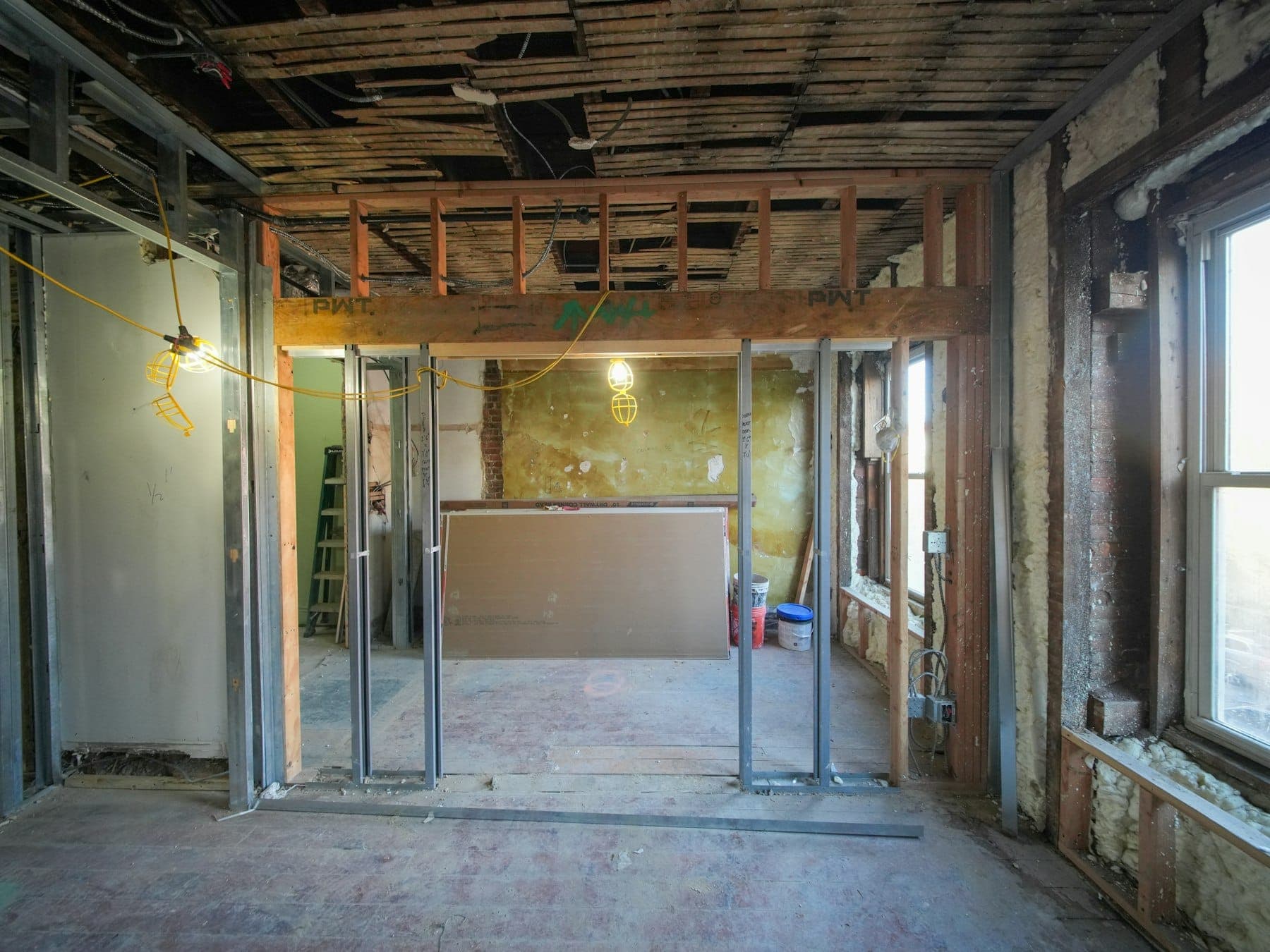
Gutted room mid-renovation with new partition framing, spray-foam insulated exterior walls and drywall sheets staged

Drywall is simple material and unforgiving work. A wall can be hung perfectly and still look wrong if the joints are finished to the wrong level for a room with a long window, and a repair can be structurally sound and still show through the paint as a halo. Most of the skill is in the finishing.

C&L Property Improvements is a family-owned company based in Muskego, installing and repairing drywall across Waukesha, Milwaukee and Racine counties, from single patches to whole rooms. Many older homes here, especially in Milwaukee and its inner suburbs, have plaster walls instead, which call for a different approach. This page covers both.

Drywall work nearly always ends in paint, and C&L does both, so a repair can be primed and painted as part of the same job. See interior painting.

What drywall work includes

New installation

Hanging board on new or opened framing for walls, ceilings and soffits. Good layout keeps butt joints out of the middle of walls where possible, and fasteners are set just below the surface without tearing the paper face.

Taping and finishing

Tape embedded in compound at every joint, corner bead on outside corners, and successive coats feathered wider each time, then sanded smooth.

Hole and dent repair

Doorknob holes, anchor holes, dents, and cut-outs left by plumbing or electrical work, backed where needed, filled, taped and finished flush.

Crack repair

Cracks at the corners of doors and windows, along ceiling seams and at inside corners, opened up and re-taped. Filling a moving crack with caulk or compound alone brings it back.

Nail and screw pops

The popped fastener reset or removed, a new screw driven nearby to pull the board tight to the framing, then spot-finished.

Water damage

Once the leak is fixed, wet, stained or soft board is cut out, the framing and cavity are allowed to dry, and new board is patched in and finished.

Plaster repair

Loose plaster re-attached to its lath, cracks reinforced, and holes built up in layers level with the surrounding wall.

Texture matching

Orange peel, knockdown and hand textures blended into the surrounding wall or ceiling. Textured ceilings in older homes should be tested for asbestos before they are scraped or sanded.

Finish levels and board types

Two choices shape how drywall looks and performs: how smooth the finish is, and what kind of board is behind it. Drywall finishes are commonly described by level; Levels 4 and 5 are the two that matter for painted rooms.

Level 4 finish

Tape embedded, then additional coats of compound over joints, corners and fasteners, sanded smooth. It is the usual finish for painted walls in living spaces.

Good for
Walls and ceilings with flat or eggshell paint and ordinary lighting.
Watch for
Under raking light, such as a long window wall, a skylight or a ceiling lit from the side, the joints can still show as faint bands, especially under glossier paint.
Level 5 finish

Everything in Level 4, plus a thin skim coat of compound over the entire surface, so paper and compound take paint the same way and the whole wall reads as one plane.

Good for
Critical lighting, glossy or dark paint, long walls, entries, stairwells and ceilings under large windows.
Watch for
More labor and material. It is worth it where the light demands it and wasted where it doesn't.

Standard gypsum board

Gypsum core with a paper face, in several thicknesses.

Good for
Dry rooms: living areas, bedrooms and hallways.
Watch for
The paper face feeds mold if it stays wet.

Moisture- and mold-resistant board

Board with a treated core and a moisture-resistant or fiberglass facing.

Good for
Bathrooms outside the shower, laundry rooms and basements.
Watch for
Resistant is not waterproof. Inside a shower, the wall needs a waterproofing membrane regardless of the board behind it; see bathroom remodeling.

Decisions for drywall and plaster work

  1. 01

    Repair plaster, cover it, or replace it?

    Repair keeps the original walls and trim details and makes the least mess. Covering plaster with thin drywall hides a badly cracked surface but thickens the wall, which changes how door and window casings sit. Tear-out opens the walls for wiring or insulation but is the heaviest, dustiest option, and in a pre-1978 house it disturbs painted surfaces on a large scale.

  2. 02

    What finish level does the room need?

    Look at where the light comes from. A bedroom with one window and flat paint is a Level 4 room. A great room with a wall of west-facing glass may need Level 5.

  3. 03

    Match the texture, or go smooth?

    A small patch in a textured ceiling can usually be blended. Where the old texture can't be matched closely, retexturing the whole surface gives an even result.

  4. 04

    Patch, or replace the sheet?

    A patch is right for holes and small damage. When damage spreads across a sheet, or the board is soft or sagging, replacing the whole piece gives a flatter wall with fewer joints to hide.

  5. 05

    While the wall is open, what else?

    An open wall is the cheapest moment to add insulation, blocking for shelves or grab bars, or wiring. Wiring changes go to an electrician before the board goes back up. For larger projects, see whole-home remodeling.

How drywall work runs

  1. 1

    Walkthrough and free estimate

    We look at the damage in person and work out its cause first, whether a leak, settling, seasonal movement or impact. The scope comes to you in writing, including the finish level and whether priming and painting are included.

  2. 2

    Protection

    Floors covered and the work area separated with plastic barriers where sanding will happen. Drywall dust travels, and containment limits how far.

  3. 3

    Removal and hanging

    Damaged material cut out back to solid framing, blocking added where the patch needs support, and new board fastened in.

  4. 4

    Tape and coat

    Tape, then several coats of compound, each dry before the next. Cold rooms and humid summer air both slow drying, which the schedule has to allow for.

  5. 5

    Sand and inspect

    Sanded smooth and checked with a light held low across the surface, which shows ridges and hollows the way raking daylight will.

  6. 6

    Prime and paint

    A drywall primer seals paper and compound so they take paint evenly, then finish paint matched to the room.

Drywall and plaster problems, and what causes them

Nail pops

Framing lumber shrinks and moves, and fasteners that weren't set tight work loose. They are common in the first years of a house and after a dry winter, and they come back unless the board is pulled tight with a new screw.

Cracks at door and window corners

Movement in a house concentrates at the corners of openings. The cure is re-taping across the crack with reinforcement, and a joint placed well away from the corner when board is replaced.

A gap where ceiling meets wall every winter

In homes with roof trusses, a gap that opens along an interior wall in winter and closes in summer is often seasonal truss movement. More compound won't hold it; the fix is how the ceiling board is fastened near that wall.

Stains and soft spots

Water from a roof, window, plumbing or ice-dam leak. The source has to be fixed and the area dried before any repair. Board that is soft or crumbling gets replaced.

Sagging plaster ceilings

Plaster that has lost its grip on the lath. It can fall, so it should be looked at promptly and either re-attached or removed safely.

Southeast Wisconsin

Wisconsin conditions behind drywall and plaster work

Older housing stock, cold winters and basement moisture decide much of the drywall and plaster work in this area.

Plaster walls in pre-war homes

The National Park Service notes that plaster was the wall surface chosen for nearly all buildings until the 1930s or 1940s, typically three coats over wood lath. Milwaukee's duplexes, built mostly from 1890 to 1930, and its bungalows of 1900 to 1930 date from that era. Plaster fails when it loses its keys, its mechanical grip on the lath. The NPS observes that it is often not as badly damaged as it first appears, and it recommends repair over wholesale removal.

No plastic sheeting behind basement drywall

Wisconsin's Uniform Dwelling Code prohibits a non-rigid sheet vapor retarder of 0.1 perm or less on a below-grade concrete or masonry wall, or on an insulated frame wall built in front of one. The US Department of Energy's Building America program explains why: vapor condenses on the plastic and leads to mold and rot. The code binds homes built under the UDC; the physics applies to every house. Basement walls get rigid foam or closed-cell spray foam against the concrete, not polyethylene behind the drywall.

Fix basement water before hanging board

University of Minnesota Extension recommends grading soil away from the house at 1 in. per foot for at least 6 ft, discharging downspouts at least 4 ft from the wall, and dealing with moisture before finishing. It warns that finishing first can lead to significant damage. Drywall hung over a damp wall becomes the damage.

Lead-safe rules when cutting painted walls

Cutting out or demolishing painted plaster or drywall in a home built before 1978 disturbs old paint. Paid work that disturbs 6 sq ft or more of painted surface in a room is regulated by the Wisconsin Department of Health Services and requires a DHS-certified lead-safe company and renovator, with no dry sweeping and HEPA-equipped tools for sanding.

Ice-dam leaks behind ceiling damage

Late-winter stains on top-floor ceilings and exterior walls are often ice dams: attic heat melts roof snow, which refreezes at the cold eave and backs up under the shingles. University of Minnesota Extension puts air sealing the ceiling first among the fixes. Repairing the drywall without that just sets up the next stain. See the ice dam guide.

Dust, timing, permits and cost

Dust

Sanding compound makes fine dust. Plastic barriers, covered floors and closed-off returns keep it contained, but no drywall job is free of dust. Plan to wipe down nearby rooms afterward.

Drying time

Compound needs to dry between coats, and cold or humid rooms slow it. Even a small repair usually spans more than one visit. Keep the heat on in winter.

Permits

Patching and replacing drywall is ordinarily repair work. Opening walls as part of a remodel that changes framing, wiring or plumbing can need permits and inspections before the walls close. The permits guide covers local rules.

What drives the price

The size and number of repairs, walls versus ceilings, the finish level, texture matching, access and ceiling height, and whether priming and painting are included. Small repairs often fit well into a painting job. Request an estimate to get the scope in writing.

Questions about drywall

Should I repair my plaster walls or replace them with drywall?

Repair is usually the better choice when the plaster is mostly sound. The National Park Service notes plaster is often less damaged than it looks. Replacement makes sense when large areas have lost their grip on the lath, or when the walls need to be open for wiring or insulation anyway.

What is a Level 5 drywall finish, and do I need it?

Level 5 adds a thin skim coat of compound over the entire surface of a Level 4 finish, so the whole wall takes paint evenly. It is worth it under strong side light, with glossy or dark paint, or on long, prominent walls. Most rooms don't need it.

Why do nail pops keep coming back?

The board isn't tight to the framing, and the lumber keeps moving with the seasons. Hammering the nail back in doesn't hold. Pulling the board tight with a new screw nearby, then refinishing, does.

Why does a crack open between my ceiling and wall every winter?

In homes with roof trusses, that is often seasonal truss movement, and it tends to close again in summer. It is a fastening problem at that wall, not a finishing problem, so more compound won't keep it closed.

Can you match my ceiling texture?

Usually closely enough for a patch to blend. Very old or unusual textures are harder, and sometimes retexturing the whole ceiling gives the most even result. If the ceiling is in an older home, have the texture tested for asbestos before anything is scraped.

What drywall should go in a bathroom or basement?

Moisture- and mold-resistant board in bathrooms outside the shower, in laundry rooms and in basements. Inside a shower, the wall needs a waterproofing membrane whatever board is behind it. In a basement, don't put plastic sheeting behind the drywall. Wisconsin's Uniform Dwelling Code prohibits it on below-grade walls, and it traps condensation in older homes too.

Do I need to replace drywall after a leak?

Fix the leak first. Board that dried quickly and stays firm often needs only a stain-blocking primer and paint. Board that is soft, crumbling, sagging or stayed wet for days should be cut out, and the cavity checked for mold and allowed to dry.

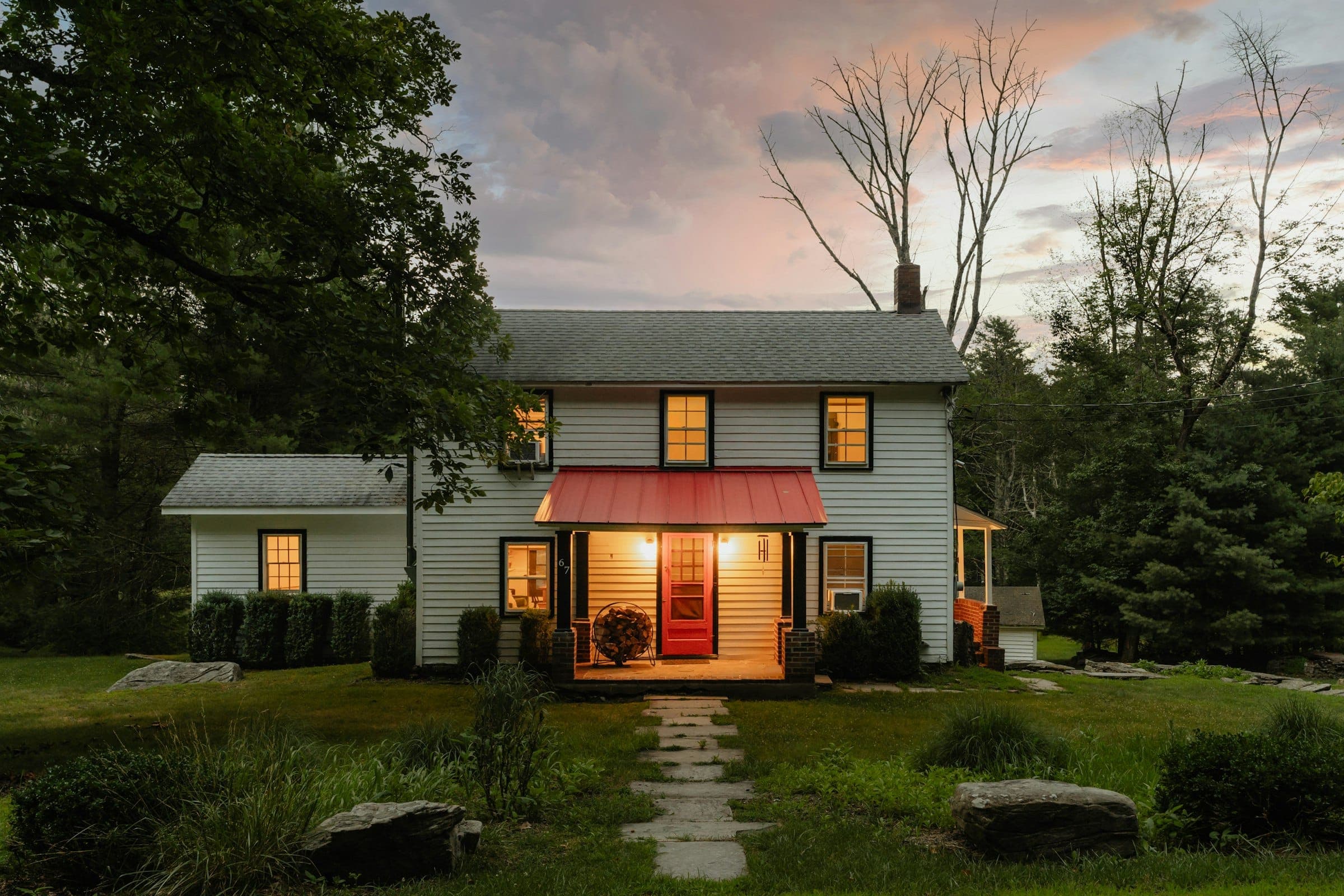
White clapboard farmhouse at dusk with lit windows and a glowing front porch under a red metal awning

Free estimates · Mon–Fri 8 a.m.–6 p.m. · Sat 9 a.m.–6 p.m.

Get a drywall estimate

Tell us what's damaged and, if you know, what caused it. The estimate is free, we look at the walls in person, and the scope comes to you in writing.